to top

Thesis Topic
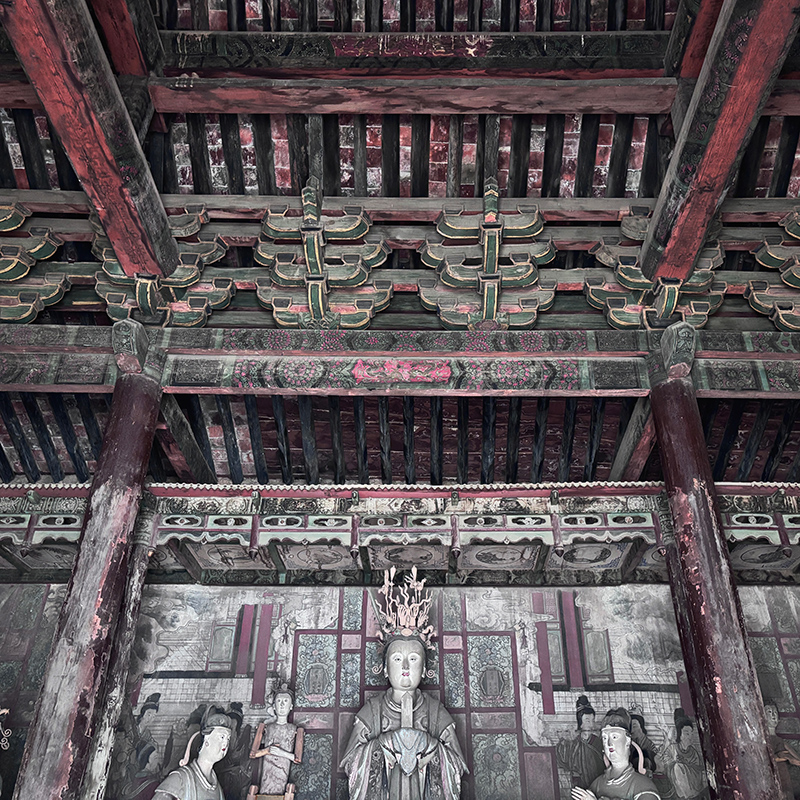
The Yuan and Ming periods (thirteenth to seventeenth centuries CE) marked a significant turning point in the history of Chinese timber architecture. Catalysed by the hereditary craftsman registration system, official and vernacular architecture developed along two parallel trajectories. Fenyang, in Shanxi Province, preserves a substantial body of Yuan- and Ming-period vernacular timber buildings, providing material evidence of the interaction between local social, economic and cultural development and craft traditions.
This study examines ten Yuan- and ten Ming-period vernacular timber buildings in Fenyang. Based on long-term fieldwork and detailed measured surveys, it adopts architectural ethnography as a framework for cultural interpretation. It traces the craftsmanship genes among vernacular timber buildings within their specific spatial and temporal contexts, analyses the distinctive Fenyang-Style of bracket sets, and explores its wider influence across northern Shanxi, Shaanxi and Hebei during the Ming and Qing periods. These findings demonstrate Fenyang’s role as a regional centre of vernacular timber architecture in the Yuan and Ming periods through the transmission and development of construction techniques.
By focusing on a stonemason family bearing the surname Guo in the Yuan dynasty and examining construction activities associated with the Qingcheng and Yonghe royal members in the Ming period, this study further reveals how vernacular timber architecture in Fenyang was shaped through the interaction between spaces of religious devotion and everyday life. It thereby explores the social foundations of Fenyang’s role as a regional centre of vernacular timber architecture during the Yuan and Ming periods.